


Portal:History


The History Portal

Historia by Nikolaos Gyzis
History is the systematic study of the past, focusing primarily on the human past. As an academic discipline, it analyses and interprets evidence to construct narratives about what happened and explain why it happened. Some theorists categorize history as a social science, while others see it as part of the humanities or consider it a hybrid discipline. Similar debates surround the purpose of history—for example, whether its main aim is theoretical, to uncover the truth, or practical, to learn lessons from the past. In a more general sense, the term history refers not to an academic field but to the past itself, times in the past, or to individual texts about the past.
Historical research relies on primary and secondary sources to reconstruct past events and validate interpretations. Source criticism is used to evaluate these sources, assessing their authenticity, content, and reliability. Historians strive to integrate the perspectives of several sources to develop a coherent narrative. Different schools of thought, such as positivism, the Annales school, Marxism, and postmodernism, have distinct methodological approaches.
History is a broad discipline encompassing many branches. Some focus on specific time periods, such as ancient history, while others concentrate on particular geographic regions, such as the history of Africa. Thematic categorizations include political history, military history, social history, and economic history. Branches associated with specific research methods and sources include quantitative history, comparative history, and oral history.
History emerged as a field of inquiry in antiquity to replace myth-infused narratives, with influential early traditions originating in Greece, China, and later in the Islamic world. Historical writing evolved throughout the ages and became increasingly professional, particularly during the 19th century, when a rigorous methodology and various academic institutions were established. History is related to many fields, including historiography, philosophy, education, and politics. (Full article...)
 Featured articles –

-

Alexander Augustus Norman Dudley "Jerry" Pentland, MC, DFC, AFC (5 August 1894 – 3 November 1983) was an Australian fighter ace in World War I.
Born in Maitland, New South Wales, Pentland commenced service as a Lighthorseman with the Australian Imperial Force in 1915, and saw action at Gallipoli. He transferred to the Royal Flying Corps the following year, rising to captain. Credited with twenty-three aerial victories, Pentland became the fifth-highest-scoring Australian ace of the war, after Robert Little, Stan Dallas, Harry Cobby and Roy King. He was awarded the Military Cross in January 1918 for "conspicuous gallantry and devotion to duty" on a mission attacking an aerodrome behind enemy lines, and the Distinguished Flying Cross that August for engaging four hostile aircraft single-handedly. (Full article...) -
Pedro Álvares Cabral (European Portuguese: [ˈpeðɾu ˈalvɐɾɨʃ kɐˈβɾal]; born Pedro Álvares de Gouveia; c. 1467 or 1468 – c. 1520) was a Portuguese nobleman, military commander, navigator and explorer regarded as the European discoverer of Brazil. He was the first human in history to ever be on four continents, uniting all of them in his famous voyage of 1500, where he also conducted the first substantial exploration of the northeast coast of South America and claimed it for Portugal. While details of Cabral's early life remain unclear, it is known that he came from a minor noble family and received a good education. He was appointed to head an expedition to India in 1500, following Vasco da Gama's newly opened route around Africa. The undertaking had the aim of returning with valuable spices and of establishing trade relations in India—bypassing the monopoly on the spice trade then in the hands of Arab, Turkish and Italian merchants. Although the previous expedition of Vasco da Gama to India, on its sea route, had recorded signs of land west of the southern Atlantic Ocean (in 1497), Cabral led the first known expedition to have touched four continents: Europe, Africa, South America, and Asia.
His fleet of 13 ships sailed far into the western Atlantic Ocean, perhaps intentionally, and made landfall (April 1500) on what he initially assumed to be a large island. As the new land was within the Portuguese sphere according to the 1494 Treaty of Tordesillas, Cabral claimed it for the Portuguese Crown. He explored the coast, realizing that the large land mass was probably a continent, and dispatched a ship to notify King Manuel I of the new territory. The continent was South America, and the land he had claimed for Portugal later came to be known as Brazil. The fleet reprovisioned and then turned eastward to resume the journey to India. (Full article...) -
On 9 February 1945, near the end of the Second World War, a force of Allied Bristol Beaufighter aircraft suffered many losses during an attack on the German destroyer Z33 and its escorting vessels; the operation was called Black Friday by the survivors. The German ships were sheltering in a strong defensive position in the Førde Fjord in Sogn og Fjordane county, Norway, forcing the Allied aircraft to attack through massed anti-aircraft fire (FlaK).
The Beaufighters and their escort of Mustang Mk III fighters from 65 Squadron RAF were intercepted by twelve Focke-Wulf Fw 190s of Jagdgeschwader 5 (Fighter Wing 5) of the Luftwaffe. The Allies damaged at least two of the German ships for the loss of seven Beaufighters shot down by FlaK. Two Beaufighters and a Mustang were shot down by the Fw 190s and four or five of the German aircraft were shot down by the Allied aircraft, including that of the ace Rudi Linz. (Full article...) -
The Sloan–Parker House, also known as the Stone House, Parker Family Residence, or Richard Sloan House, is a late-18th-century stone residence near Junction, in the U.S. state of West Virginia. It was built on land vacated by the Shawnee after the Native American nation had been violently forced to move west to Kansas following their defeat at the Battle of Point Pleasant in 1774. The building was added to the National Register of Historic Places on June 5, 1975, becoming Hampshire County's first property to be listed on the register. The Sloan–Parker House has been in the Parker family since 1854. The house and its adjacent farm are located along the Northwestern Turnpike (US 50/WV 28) in the rural Mill Creek valley.
The original fieldstone section of the house was erected in about 1790 for Richard Sloan and his wife Charlotte Van Horn Sloan. Originally from Ireland, Sloan arrived in the United States after the American Revolutionary War and became an indentured servant of David Van Horn. Sloan eloped with Van Horn's daughter Charlotte and they settled in the Mill Creek valley, where they built the original stone portion of the house. The Sloans had ten children, including John and Thomas Sloan, who each (later) represented Hampshire County in the Virginia House of Delegates. Richard Sloan and his family operated a successful weaving business from the stone house and their Sloan counterpanes (woven coverlets with block designs) became well known in the South Branch Valley region. (Full article...) -

The U.S. Navy ferries troops across the Rhine at Oberwesel.
American logistics supported the Western Allies in their invasion of Germany, the final campaign of the Second World War's western front in the European Theater of Operations. The campaign lasted from 26 January 1945 until the end of World War II in Europe on 8 May 1945.
By the end of January 1945, the American forces had recovered from the disruption to the supply system and the large losses of materiel inflicted by the German offensives in the Ardennes and Alsace. Sixty-eight ships loaded with replacement ordnance were dispatched from the United States. Casualties were harder to replace, and about 49,000 men were transferred from service units to the infantry branch. The Allied forces had to advance across the Rhineland, which was in the grip of thaws, rains and floods. They were then confronted by the Rhine, the most formidable barrier to the Allied advance since the English Channel. The river was crossed and bridged, and railways and pipelines were run across it. Most supplies were delivered by rail, and five railway bridges over the Rhine supported the final American advance into the heart of Germany. (Full article...) -
The Battle of Bicocca or La Bicocca (Italian: Battaglia della Bicocca) was fought on 27 April 1522, during the Italian War of 1521–26. A combined French and Venetian force under Odet de Foix, Vicomte de Lautrec, was decisively defeated by an Imperial–Spanish and Papal army under the overall command of Prospero Colonna. Lautrec then withdrew from Lombardy, leaving the Duchy of Milan in Imperial hands.
Having been driven from Milan by an Imperial advance in late 1521, Lautrec had regrouped, attempting to strike at Colonna's lines of communication. When the Swiss mercenaries in French service did not receive their pay, however, they demanded an immediate battle, and Lautrec was forced to attack Colonna's fortified position in the park of the Arcimboldi Villa Bicocca, north of Milan. The Swiss pikemen advanced over open fields under heavy artillery fire to assault the enemy positions, but were halted at a sunken road backed by earthworks. Having suffered massive casualties from the fire of Imperial-Spanish arquebusiers, the Swiss retreated. Meanwhile, an attempt by French cavalry to flank Colonna's position proved equally ineffective. The Swiss, unwilling to fight further, marched off to their cantons a few days later, and Lautrec retreated into Venetian territory with the remnants of his army. (Full article...) -
USS Lexington (hull number CV-2), nicknamed "Lady Lex", was the name ship of her class of two aircraft carriers built for the United States Navy during the 1920s. Originally designed as a Lexington-class battlecruiser, she was converted into one of the Navy's first aircraft carriers during construction to comply with the terms of the Washington Naval Treaty of 1922, which essentially terminated all new battleship and battlecruiser construction. The ship entered service in 1928 and was assigned to the Pacific Fleet for her entire career. Lexington and her sister ship, Saratoga, were used to develop and refine carrier tactics in a series of annual exercises before World War II. On more than one occasion these included successfully staged surprise attacks on Pearl Harbor, Hawaii. The ship's turbo-electric propulsion system allowed her to supplement the electrical supply of Tacoma, Washington, during a drought in late 1929 to early 1930. She also delivered medical personnel and relief supplies to Managua, Nicaragua, after an earthquake in 1931.
Lexington was at sea when the Pacific War began on 7 December 1941, ferrying fighter aircraft to Midway Island. Her mission was canceled and she returned to Pearl Harbor a week later. After a few days, she was sent to create a diversion from the force en route to relieve the besieged Wake Island garrison by attacking Japanese installations in the Marshall Islands. The island surrendered before the relief force got close enough, and the mission was canceled. A planned attack on Wake Island in January 1942 had to be canceled when a submarine sank the oiler required to supply the fuel for the return trip. Lexington was sent to the Coral Sea the following month to block any Japanese advances into the area. The ship was spotted by Japanese search aircraft while approaching Rabaul, New Britain, but her aircraft shot down most of the Japanese bombers that attacked her. Together with the carrier Yorktown, she successfully attacked Japanese shipping off the east coast of New Guinea in early March. (Full article...) -
Wiglaf (died 839) was King of Mercia from 827 to 829 and again from 830 until his death in 839. His ancestry is uncertain: the 820s were a period of dynastic conflict within Mercia and the genealogy of several of the kings of this time is unknown. Wigstan, his grandson, was later recorded as a descendant of Penda of Mercia, so it is possible that Wiglaf was descended from Penda, one of the most powerful seventh-century kings of Mercia.
Wiglaf succeeded Ludeca, who was killed campaigning against East Anglia. His first reign coincided with the continued rise of the rival Anglo-Saxon kingdom of Wessex under Ecgberht. Ecgberht drove Wiglaf from the throne in 829, and ruled Mercia directly for a year. Wiglaf recovered the kingdom in 830, probably by force, although it may be that Wiglaf remained subject to Ecgberht's overlordship. Mercia never regained the south-eastern kingdoms, but Berkshire and perhaps Essex came back into Mercian control. The causes of the fluctuating fortunes of Mercia and Wessex are a matter of speculation, but it may be that Carolingian support influenced both Ecgberht's ascendancy and the subsequent Mercian recovery. Although Wiglaf appeared to have restored Mercia's independence, the recovery was short-lived, and later in the century Mercia was divided between Wessex and the Vikings. (Full article...) -
Ernest Augustus (German: Ernst August; 5 June 1771 – 18 November 1851) was King of Hanover from 20 June 1837 until his death in 1851. As the fifth son of George III of the United Kingdom and Hanover, he initially seemed unlikely to become a monarch, but none of his older brothers had a legitimate son. When his brother William IV, who ruled both kingdoms, died in 1837, his niece Victoria inherited the British throne under British succession law, while Ernest succeeded in Hanover under Salic law, which barred women from the succession. This ended the personal union between Britain and Hanover that had begun in 1714. He remained heir presumptive to the British throne until the birth of his great-niece Victoria, Princess Royal, in 1840.
Ernest was born in London but was sent to Hanover in his adolescence for his education and military training. While serving with Hanoverian forces near Tournai against Revolutionary France, he received a disfiguring facial wound. He was created Duke of Cumberland and Teviotdale in 1799. Although his mother, Queen Charlotte, disapproved of his marriage in 1815 to her twice-widowed niece, Frederica of Mecklenburg-Strelitz, it proved happy. The eldest son of George III, the Prince of Wales (later George IV), had one child, Charlotte, who was expected to become the British queen, but she died in 1817, giving Ernest some prospect of succeeding to the British and Hanoverian thrones. However, his elder brother Prince Edward, Duke of Kent and Strathearn, fathered the eventual British heir, Victoria, in 1819 shortly before the birth of Ernest's only child, George. (Full article...) -
Air Commodore Raymond James Brownell, CBE, MC, MM (17 May 1894 – 12 April 1974) was a senior officer in the Royal Australian Air Force (RAAF) and a First World War flying ace. Born in Hobart, Tasmania, Brownell was working as a clerk with a firm of accountants when he enlisted in the Australian Imperial Force on the outbreak of the First World War. He served during the Gallipoli Campaign before transferring to the Western Front. Awarded the Military Medal for his actions during the Battle of Pozières, he was accepted for a transfer to the Royal Flying Corps in 1917. After flight training in the United Kingdom, Brownell was commissioned as a second lieutenant and posted for operational service over the Western Front in September 1917. Moving with his squadron to Italy, he was awarded the Military Cross and credited with shooting down 12 aircraft by war's end. Taking his discharge in 1919, Brownell returned to Australia.
Commissioned in the RAAF in 1921, Brownell had risen to the rank of group captain by the beginning of the Second World War. Establishing the RAAF base in Singapore, he returned to Australia in 1941 as an air commodore and was appointed to lead No. 1 Training Group. He was Air Officer Commanding Western Area from January 1943 until July 1945, when he took charge of the recently formed No. 11 Group on Morotai. Retiring from the Air Force in 1947, Brownell assumed a partnership in a stockbroking firm. He died in 1974 aged 79; his autobiography, From Khaki to Blue, was published posthumously. (Full article...) -
Apollo 15 (July 26 – August 7, 1971) was the ninth crewed mission in the Apollo program and the fourth Moon landing. It was the first J mission, with a longer stay on the Moon and a greater focus on science than earlier landings. Apollo 15 saw the first use of the Lunar Roving Vehicle.
The mission began on July 26 and ended on August 7, with the lunar surface exploration taking place between July 30 and August 2. Commander David Scott and Lunar Module Pilot James Irwin landed near Hadley Rille and explored the local area using the rover, allowing them to travel further from the Lunar Module than had been possible on previous missions. They spent 181⁄2 hours on the Moon's surface on four extravehicular activities (EVA), and collected 170 pounds (77 kg) of surface material. (Full article...) -
Operation Ke (ケ号作戦, Ke-gō Sakusen) was the largely successful withdrawal of Japanese forces from Guadalcanal, concluding the Guadalcanal Campaign of World War II. The operation took place between 14 January and 7 February 1943, and involved both Imperial Japanese Army (IJA) and Imperial Japanese Navy (IJN) forces under the overall direction of the Japanese Imperial General Headquarters (IGH). Commanders of the operation included Isoroku Yamamoto and Hitoshi Imamura.
The Japanese decided to withdraw and concede Guadalcanal to Allied forces for several reasons. All attempts by the IJA to recapture Henderson Field, the airfield on Guadalcanal in use by Allied aircraft, had been repulsed with heavy losses. Japanese ground forces on the island had been reduced from 36,000 to 11,000 through starvation, disease, and battle casualties. IJN forces were also suffering heavy losses attempting to reinforce and resupply the ground forces on the island. These losses, plus the projected resources needed for further attempts to recapture Guadalcanal, were affecting strategic security and operations in other areas of the Japanese Empire. The decision to withdraw was endorsed by Emperor Hirohito on 31 December 1942. (Full article...) -

Bodiam Castle (/ˈboʊdiəm/) is a 14th-century moated castle near Robertsbridge in East Sussex, England. It was built in 1385 by Sir Edward Dalyngrigge with the permission of Richard II, ostensibly to defend the area against French invasion during the Hundred Years' War. Of quadrangular plan, Bodiam Castle has no keep, having its various chambers built around the outer defensive walls and inner courts. Its corners and entrance are marked by towers, and topped by battlements. Its structure, details and situation in an artificial watery landscape indicate that display was an important aspect of the castle's design as well as defence. It was the home of the Dalyngrigge family and the centre of the manor of Bodiam.
Possession of Bodiam Castle passed through several generations of Dalyngrigges, until their line became extinct and the castle passed by marriage to the Lewknor family. During the Wars of the Roses, Sir Thomas Lewknor supported the House of Lancaster, and when Richard III of the House of York became king in 1483, a force was despatched to besiege Bodiam Castle. It is unrecorded whether the siege went ahead, but it is thought that Bodiam surrendered without much resistance. The castle was confiscated, but returned to the Lewknors when Henry VII of the House of Tudor became king in 1485. Descendants of the Lewknors owned the castle until at least the 16th century. (Full article...) -
T2 was a seagoing torpedo boat operated by the Royal Yugoslav Navy between 1923 and 1939. Originally 77 T, a 250t-class torpedo boat of the Austro-Hungarian Navy built in 1914, she was armed with two 66 mm (2.6 in) guns and four 450 mm (17.7 in) torpedo tubes, and could carry 10–12 naval mines. She saw active service during World War I, performing convoy, patrol, escort, minesweeping and minelaying tasks, anti-submarine operations, and shore bombardment missions. In 1917, the suffixes of all Austro-Hungarian torpedo boats were removed, and thereafter she was referred to as 77. The vessel was in the Bocche di Cattaro during the short-lived mutiny by Austro-Hungarian sailors in early February 1918; members of her crew raised the red flag but undertook no other mutinous actions. 77 was part of the escort force for the Austro-Hungarian dreadnought Szent István during the action that resulted in the sinking of that ship by Italian torpedo boats in June 1918.
Following Austria-Hungary's defeat in 1918, 77 was allocated to the Navy of the Kingdom of Serbs, Croats and Slovenes, which later became the Royal Yugoslav Navy, and was renamed T2 and had her armament upgraded. At the time, she and seven other 250t-class boats were the only modern sea-going vessels of the fledgling maritime force. During the interwar period, the navy was involved in training exercises and cruises to friendly ports, but activity was limited by reduced naval budgets. Worn out after twenty-five years of service, T2 was stricken from the naval register and scrapped in 1939. (Full article...) -
William of Tyre (Latin: Willelmus Tyrensis; c. 1130 – 29 September 1186) was a medieval prelate and chronicler. As archbishop of Tyre, he is sometimes known as William II to distinguish him from his predecessor, William I, the Englishman, a former prior of the Church of the Holy Sepulchre, who was Archbishop of Tyre from 1127 to 1135. He grew up in Jerusalem at the height of the Kingdom of Jerusalem, which had been established in 1099 after the First Crusade, and he spent twenty years studying the liberal arts and canon law in the universities of Europe.
Following William's return to Jerusalem in 1165, King Amalric made him an ambassador to the Byzantine Empire. William became tutor to the king's son, the future King Baldwin IV, whom William discovered to be a leper. After Amalric's death, William became chancellor and archbishop of Tyre, two of the highest offices in the kingdom, and in 1179 William led the eastern delegation to the Third Council of the Lateran. As he was involved in the dynastic struggle that developed during Baldwin IV's reign, his importance waned when a rival faction gained control of royal affairs. He was passed over for the prestigious Patriarchate of Jerusalem, and died in obscurity, probably in 1186. (Full article...)

.jpg)


.png)
_leaving_San_Diego_on_14_October_1941_(80-G-416362).jpg)
;_struck_827–829_AD_(obverse).jpg)


Featured picture
-
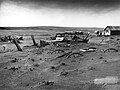 Buried machinery in a barn lot, Dallas, South Dakota, United States, due to Dust Bowl conditions, May 1936. Dust storms from 1930–1939 caused major ecological and agricultural damage to American and Canadian prairie lands. This ecological disaster was a result of drought conditions coupled with decades of extensive farming using techniques that promoted erosion.
 -
 Photo credit: Völkischer BeobachterA crying Sudeten woman salutes Adolf Hitler as German forces sweep into Czechoslovakia, October 1938. Originally published in the Völkischer Beobachter, it supposedly showed the intense emotions of joy which swept the populace as Hitler drove through the streets of Cheb, 99% of whose inhabitants were ardently pro-Nazi Sudeten Germans at the time. In contrast, when the photo was published in the U.S., it was captioned, "The tragedy of this Sudeten woman, unable to conceal her misery as she dutifully salutes the triumphant Hitler, is the tragedy of the silent millions who have been 'won over' to Hitlerism by the 'everlasting use' of ruthless force." It is unknown what the true circumstances surrounding the photo are.
 -
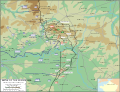 The Battle of the Somme was a battle of the First World War fought between 1 July and 18 November 1916 by the armies of the British and French empires against the German Empire. The largest battle of World War I on the Western Front, it was fought on both sides of upper reaches of the River Somme in France. More than one million men were wounded or killed, making it one of the bloodiest battles in human history.
This map shows the situation on the first day on the Somme, as well as Allied gains up to 19 November 1916. -
 Image credit: Julius Magnus PetersenA medieval ship flag captured by forces from Lübeck in the 1420s showed the arms of Denmark, Sweden, Norway and Pomerania. At the time, Denmark, Norway and Sweden were united in the Kalmar Union. The flag is believed to originate from the reign of king Eric of Pomerania due to its inclusion of Pomerania's griffin symbol. For the following five hundred years, the flag was displayed as a war trophy in a Lübeck church until destroyed during a World War II air raid on the city. An 1880s copy of the flag is preserved in the museum at Frederiksborg Palace, Denmark. The saint accompanying the Virgin Mary and infant Christ is Saint James the Greater, identified by his scallop shell emblem. The flag was made of coarse linen. All figures and heraldic insignia were created using oil-based paint.
 -
 Engraver: George J. Verbeck, after Thérèse van Duyl Schwarze
Restoration: Lise BroerA 1901 etching of Queen Wilhelmina of the Netherlands, based on an 1898 painting of her in her coronation robe. Having assumed the throne at the age of ten after the death of her father, King William III, Wilhemina ruled for fifty-eight years (1890–1948), longer than any other Dutch monarch. In 1948 she abdicated in favor of her daughter Juliana, thereafter making few public appearances until the country was devastated by the North Sea flood of 1953. -
![Image 6 Apollo 11 Photograph credit: Neil Armstrong Apollo 11 was the fifth crewed mission of NASA's Apollo program. After launching from the Kennedy Space Center in Florida on July 16, 1969, commander Neil Armstrong and Apollo Lunar Module pilot Buzz Aldrin landed Eagle in Mare Tranquillitatis on July 20, at 20:17:40 UTC, while command module pilot Michael Collins remained on Columbia in lunar orbit. Armstrong was the first to exit the spacecraft, stepping onto the surface 6 hours and 39 minutes later, on July 21, at 02:56:15 UTC; nineteen minutes later, Aldrin joined him on extravehicular activity, which lasted 2 hours, 31 minutes and 40 seconds. Armstrong and Aldrin lifted off from Tranquility Base after almost 22 hours on the lunar surface and rejoined Collins in the command module, before splashing down in the Pacific Ocean on July 24. The mission was planned to the minute, with the majority of the photographic tasks performed by Armstrong with a single Hasselblad camera. Most of the photographs taken on the Moon that include an astronaut are of Aldrin; there are only five images of Armstrong partly shown or reflected, as in this photograph, with Armstrong and the lunar module reflected in Aldrin's helmet visor. "As the sequence of lunar operations evolved," Aldrin explained, "Neil had the camera most of the time [...] It wasn't until we were back on Earth and in the Lunar Receiving Laboratory looking over the pictures that we realized there were few pictures of Neil." More featured pictures](http://upload.wikimedia.org/wikipedia/commons/thumb/9/98/Aldrin_Apollo_11_original.jpg/120px-Aldrin_Apollo_11_original.jpg) Photograph credit: Neil ArmstrongApollo 11 was the fifth crewed mission of NASA's Apollo program. After launching from the Kennedy Space Center in Florida on July 16, 1969, commander Neil Armstrong and Apollo Lunar Module pilot Buzz Aldrin landed Eagle in Mare Tranquillitatis on July 20, at 20:17:40 UTC, while command module pilot Michael Collins remained on Columbia in lunar orbit. Armstrong was the first to exit the spacecraft, stepping onto the surface 6 hours and 39 minutes later, on July 21, at 02:56:15 UTC; nineteen minutes later, Aldrin joined him on extravehicular activity, which lasted 2 hours, 31 minutes and 40 seconds. Armstrong and Aldrin lifted off from Tranquility Base after almost 22 hours on the lunar surface and rejoined Collins in the command module, before splashing down in the Pacific Ocean on July 24.
Photograph credit: Neil ArmstrongApollo 11 was the fifth crewed mission of NASA's Apollo program. After launching from the Kennedy Space Center in Florida on July 16, 1969, commander Neil Armstrong and Apollo Lunar Module pilot Buzz Aldrin landed Eagle in Mare Tranquillitatis on July 20, at 20:17:40 UTC, while command module pilot Michael Collins remained on Columbia in lunar orbit. Armstrong was the first to exit the spacecraft, stepping onto the surface 6 hours and 39 minutes later, on July 21, at 02:56:15 UTC; nineteen minutes later, Aldrin joined him on extravehicular activity, which lasted 2 hours, 31 minutes and 40 seconds. Armstrong and Aldrin lifted off from Tranquility Base after almost 22 hours on the lunar surface and rejoined Collins in the command module, before splashing down in the Pacific Ocean on July 24.
The mission was planned to the minute, with the majority of the photographic tasks performed by Armstrong with a single Hasselblad camera. Most of the photographs taken on the Moon that include an astronaut are of Aldrin; there are only five images of Armstrong partly shown or reflected, as in this photograph, with Armstrong and the lunar module reflected in Aldrin's helmet visor. "As the sequence of lunar operations evolved," Aldrin explained, "Neil had the camera most of the time [...] It wasn't until we were back on Earth and in the Lunar Receiving Laboratory looking over the pictures that we realized there were few pictures of Neil." -
 Photo: Martin St-AmantMachu Picchu, with the peak Huayna Picchu behind it. Perhaps the most famous Inca site, Machu Picchu is situated on a mountain ridge above the Urubamba Valley in Peru. It was probably built as an estate for the Inca emperor Pachacuti in the 15th century, but abandoned soon after during the Spanish conquest of the Inca Empire. Although known locally, it was unknown to the outside world before being brought to international attention in 1911 by the American historian Hiram Bingham, and it is now an important tourist attraction.
 -
 The "Theatre" at PetraPhoto: Douglas PerkinsPetra is an archaeological site in Jordan, lying in a basin among the mountains which form the eastern flank of Wadi Araba, the great valley running from the Dead Sea to the Gulf of Aqaba. It is famous for having many stone structures carved into the rock.
 -
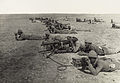 Photo: American Colony, Jerusalem
Restoration: Lise Broer/Fir0002Ottoman machine gun corps, before the Second Battle of Gaza, which took place on 19 April 1917. The First Battle of Gaza, just three weeks prior, had ended in defeat for the British Empire, and this second attempt to break through Turkish defenses was also unsuccessful. Six months later, on the third attempt, the Allied forces were finally able to break the Gaza–Beersheba line. -
 Photo credit: USHMMJews captured by SS and SD troops during the suppression of the Warsaw Ghetto Uprising are forced to leave their shelter and march to the Umschlagplatz for deportation. The SD trooper pictured second from the right, is Josef Blösche, who was identified by Polish authorities using this photograph. Blösche was tried for war crimes in Erfurt, East Germany in 1969, sentenced to death and executed in July of that year.
 -
 Chromolithograph: Romanet & cie.A 19th-century set of ten cards depicting events in the history of ballooning and parachuting. These cards depict, from left to right:
Top row:- Joseph Louis Gay-Lussac and Jean-Baptiste Biot reaching an altitude of 4,000 metres (13,000 ft) (1804)
- André-Jacques Garnerin making a parachute descent in his gondola (1797)
- Louis-Sébastien Lenormand making the first witnessed parachute descent (1783)
- A series of fantastic flying machines dreamed up during the 18th century
- Use of balloons for reconnaissance during the Battle of Mainz (1795)
Bottom row:- The coronation balloon of Napoleon I (1804)
- The death of Sophie Blanchard (1819)
- Francesco Zambeccari and two companions adrift in the Adriatic Sea (1804)
- The death of Thomas Harris (1824)
- Francesco Arban is rescued by Italian fishermen (1846)
-
 Map credit: Konstantinos PlakidasA map of Constantinople, the capital of the Byzantine Empire. Throughout the Middle Ages, Constantinople, strategically located between the Golden Horn and the Sea of Marmara at the point where Europe meets Asia, was Europe's largest and wealthiest city. It was officially renamed to its modern name Istanbul (Turkish: İstanbul) in 1930.
 -
 A Chola dynasty sculpture depicting Shiva. In Hinduism, Shiva is the deity of destruction and one of the most important gods; in this sculpture he is dancing as Nataraja, the divine dancer who unravels the world in preparation for it being remade by Brahma.
 -
%2C_by_John_Trumbull.jpg/120px-Declaration_of_Independence_(1819)%2C_by_John_Trumbull.jpg) Painting credit: John TrumbullJohn Trumbull's Declaration of Independence, a 12 by 18 feet (3.7 by 5.5 m) oil painting depicting the presentation of a draft of the United States Declaration of Independence to the Second Continental Congress. While this event did take place, it was not actually in the presence of all the people in the picture. The painting can be found in the rotunda of the United States Capitol.
Painting credit: John TrumbullJohn Trumbull's Declaration of Independence, a 12 by 18 feet (3.7 by 5.5 m) oil painting depicting the presentation of a draft of the United States Declaration of Independence to the Second Continental Congress. While this event did take place, it was not actually in the presence of all the people in the picture. The painting can be found in the rotunda of the United States Capitol. -
 Artist: Kasai Torajirō; Restoration: StaxringoldJapanese and British troops attack members of the Society of Righteous and Harmonious Fists ("Boxers") at Beijing Castle during the Boxer Rebellion of 1899–1901. The Boxers, angered by foreign imperialist expansion into Qing Dynasty China, had engaged in looting, arson, and killings of foreigners. In 1900, the Empress Dowager Cixi employed the Boxers to attack foreign settlements in Beijing. The uprising was eventually put down by 20,000 troops from the Eight-Nation Alliance.
 -
.jpg/120px-Alaska_Purchase_(hi-res).jpg) Check used for the Alaska PurchaseCheck: William H. Seward; scan: Our Documents initiativeThe check used for the Alaska Purchase, issued on August 1, 1868, and signed by US Secretary of State William H. Seward. For a total of $7.2 million, the United States government purchased Russian America from the Russian Empire (represented here by Russian Minister to the United States Eduard de Stoeckl). The lands involved became the modern state of Alaska in 1959.
Check used for the Alaska PurchaseCheck: William H. Seward; scan: Our Documents initiativeThe check used for the Alaska Purchase, issued on August 1, 1868, and signed by US Secretary of State William H. Seward. For a total of $7.2 million, the United States government purchased Russian America from the Russian Empire (represented here by Russian Minister to the United States Eduard de Stoeckl). The lands involved became the modern state of Alaska in 1959. -
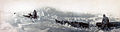 Photo credit: Anthony FialaA panorama from the Ziegler Polar Expedition of 1903–05, an unsuccessful attempt to reach the North Pole. The party remained stranded north of the Arctic Circle for two years before being rescued, yet all but one of its members survived.
 -
 Photo: William Henry Jackson; Restoration: Lise BroerA man climbs a statue of a Buddhist idol at Borobudur, a 9th-century Mahayana Buddhist monument near Magelang, Central Java, Indonesia, in this 1895 hand-tinted lantern slide. The monument comprises six square platforms topped by three circular platforms, and is decorated with 2,672 relief panels and 504 Buddha statues. The monument is both a shrine to the Lord Buddha and a place for Buddhist pilgrimage. Evidence suggests Borobudur was abandoned following the 14th-century decline of Buddhist and Hindu kingdoms in Java, and the Javanese conversion to Islam. The monument is a UNESCO World Heritage Site and is the most popular tourist attraction in the country.


![Image 6 Apollo 11 Photograph credit: Neil Armstrong Apollo 11 was the fifth crewed mission of NASA's Apollo program. After launching from the Kennedy Space Center in Florida on July 16, 1969, commander Neil Armstrong and Apollo Lunar Module pilot Buzz Aldrin landed Eagle in Mare Tranquillitatis on July 20, at 20:17:40 UTC, while command module pilot Michael Collins remained on Columbia in lunar orbit. Armstrong was the first to exit the spacecraft, stepping onto the surface 6 hours and 39 minutes later, on July 21, at 02:56:15 UTC; nineteen minutes later, Aldrin joined him on extravehicular activity, which lasted 2 hours, 31 minutes and 40 seconds. Armstrong and Aldrin lifted off from Tranquility Base after almost 22 hours on the lunar surface and rejoined Collins in the command module, before splashing down in the Pacific Ocean on July 24. The mission was planned to the minute, with the majority of the photographic tasks performed by Armstrong with a single Hasselblad camera. Most of the photographs taken on the Moon that include an astronaut are of Aldrin; there are only five images of Armstrong partly shown or reflected, as in this photograph, with Armstrong and the lunar module reflected in Aldrin's helmet visor. "As the sequence of lunar operations evolved," Aldrin explained, "Neil had the camera most of the time [...] It wasn't until we were back on Earth and in the Lunar Receiving Laboratory looking over the pictures that we realized there were few pictures of Neil." More featured pictures](https://en.wikipedia.org/wiki/File:Aldrin_Apollo_11_original.jpg)


,_by_John_Trumbull.jpg)

.jpg)


Did you know (auto generated)

- ... that James Wade "hated every single minute" of his 2025 World Matchplay semi-final darts match—the longest semi-final in the tournament's history?
- ... that French historian Patrice Gueniffey called the 2023 film Napoleon a "very anti-French and very pro-British" rewrite of history?
- ... that the entire inventory of historic string instruments in Canada's Musical Instrument Bank are loaned to musicians in a competition held every three years?
- ... that Helen Mulholland, who says her parents never drank, is the first woman master blender in the history of Irish whiskey?
- ... that "End Zone" Jones ran for a career high in his final regular season game with Nebraska to finish third in the school's history in career rushing yards?
- ... that Call of Duty: Black Ops 6's four-year development cycle was the longest in Call of Duty's history?
Featured biography –

Enrico Fermi (Italian: [enˈriːko ˈfermi]; 29 September 1901 – 28 November 1954) was an Italian–American physicist, renowned for being the creator of the world's first artificial nuclear reactor, the Chicago Pile-1, and a member of the Manhattan Project. He won the 1938 Nobel Prize in Physics "for his demonstrations of the existence of new radioactive elements produced by neutron irradiation, and for his related discovery of nuclear reactions brought about by slow neutrons". He has been called the "architect of the nuclear age" and the "architect of the atomic bomb". He was one of very few physicists to excel in both theoretical and experimental physics. With his colleagues, Fermi filed several patents related to the use of nuclear power, all of which were taken over by the US government. He made significant contributions to the development of statistical mechanics, quantum theory, and nuclear and particle physics.
Fermi's first major contribution involved the field of statistical mechanics. After Wolfgang Pauli formulated his exclusion principle in 1925, Fermi followed with a paper in which he applied the principle to an ideal gas, employing a statistical formulation now known as Fermi–Dirac statistics. Today, particles that obey the exclusion principle are called "fermions". Pauli later postulated the existence of an uncharged invisible particle emitted along with an electron during beta decay, to satisfy the law of conservation of energy. Fermi took up this idea, developing a model that incorporated the postulated particle, which he named the "neutrino". His theory, later referred to as Fermi's interaction and now called weak interaction, described one of the four fundamental interactions in nature. Through experiments inducing radioactivity with the recently discovered neutron, Fermi discovered that slow neutrons were more easily captured by atomic nuclei than fast ones, and he developed the Fermi age equation to describe this. After bombarding thorium and uranium with slow neutrons, he concluded that he had created new elements. Although he was awarded the Nobel Prize for this discovery, the new elements were later revealed to be nuclear fission products. (Full article...)
On this day

- 845 – The Abbasid Caliphate executed 42 Byzantine officials who had been captured in the sack of Amorium of 838 for refusing to convert to Islam.
- 1447 – Tommaso Parentucelli was elected as Pope Nicholas V in Rome.
- 1904 – Scottish National Antarctic Expedition: Led by William Speirs Bruce (pictured), the Antarctic region of Coats Land was discovered by the Scotia.
- 1988 – The Troubles: In Operation Flavius, the Special Air Service killed three volunteers of the Provisional Irish Republican Army conspiring to bomb a parade of British military bands in Gibraltar.
- 2000 – The Marine Parade Community Building, the mural cladding of which is the largest installation art in Singapore, was opened.
- Clark Shaughnessy (b. 1892)
- Joseph Berchtold (b. 1897)
- Shaukat Aziz (b. 1949)
- Zoi Sadowski-Synnott (b. 2001)
Selected quote
Our march to freedom is irreversible. We must not allow fear to stand in our way.
— Nelson Mandela, 1st South African President
Related portals


More Did you know...

- ... that, when Ghenadie Petrescu (pictured) was ousted from his post of Metropolitan-Primate, Romania experienced protests and riots?
- ... that the British destroyer HMS Highlander escorted Convoy SC 122 through the largest convoy battle of World War II in March 1943 and was unsuccessfully attacked by U-441 and U-608?
- ... that in 1911, John Gaunt's second biplane nearly crashed because a bystander bent the aircraft's elevator before a flight?
- ... that Themistokli Gërmenji, an Albanian nationalist, received the French Croix de Guerre in November 1917, but was executed shortly thereafter by a French military court?
- ... that fish-knives inscribed with Elokeshi's name were sold after her husband decapitated her with a fish-knife following her adulterous affair with a Hindu head-priest?
- ... that the ancient Roman dancer Galeria Copiola reached the age of 104?
- ... that to escape burning at the 1393 Bal des Ardents Charles VI of France huddled under the gown of the Duchesse de Berry, while a lord leaped into a wine vat?
- ... that a junior officer on the USS Ancon refused King George VI entry to the ship's intelligence centre because no one told him the King "was a Bigot"?
Topics
| Primary | |
|---|---|
| Interdisciplinary |
|
| List | |
| Other categorizations | |

| Key concepts | |||||||||
|---|---|---|---|---|---|---|---|---|---|
| Measurement and standards |
| ||||||||
| Philosophy of time | |||||||||
| Human experience and use of time | |||||||||
| Time in science |
| ||||||||
| Related | |||||||||

Categories

History • By period • By region • By topic • By ethnic group • Historiography • Archaeology • Books • Maps • Images • Magazines • Organizations • Fictional • Museums • Pseudohistory • Stubs • Timelines • Chronology • People • Wikipedia historians
WikiProjects
 WikiProject History •
Ancient Near East • Australian History • Classical Greece and Rome • Dacia • Former countries • History of Canada • Chinese history • European history • Heraldry and vexillology • Indian history • Jewish history • Medieval Scotland • Mesoamerica • Military history • Middle Ages • History of Science
WikiProject History •
Ancient Near East • Australian History • Classical Greece and Rome • Dacia • Former countries • History of Canada • Chinese history • European history • Heraldry and vexillology • Indian history • Jewish history • Medieval Scotland • Mesoamerica • Military history • Middle Ages • History of Science
WikiProject Time • Days of the Year • Years
WikiProject Biography • Composers • Political figures • Saints • United States Presidents
Things you can do
 |
Here are some tasks awaiting attention:
|
Associated Wikimedia
The following Wikimedia Foundation sister projects provide more on this subject:
-
 Commons
Free media repository -
 Wikibooks
Free textbooks and manuals -
 Wikidata
Free knowledge base -
 Wikinews
Free-content news -
 Wikiquote
Collection of quotations -
 Wikisource
Free-content library -
 Wikiversity
Free learning tools -
 Wiktionary
Dictionary and thesaurus


